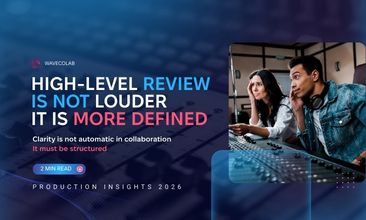
The session that taught me the most started with a whisper.
It was late. A young artist sat across from me, clutching her notebook like it was armor. We’d spent hours circling the same chorus—three rewrites, four mix passes—and nothing felt “right” to her. At first I tried technical fixes. Different vocals, different reverbs, different balances. None of it moved the needle.
That night I realized the problem wasn’t sound.
It was trust.
And that realization changed the way I work.
Because producing isn’t just about getting the mix right. It’s about understanding people.
Build Your Network Before You Need It
When I started out, I believed my best mixes would bring me work. But the people who hired me weren’t reacting to plugins or credits. They remembered conversations after shows, comments I’d left on their demos, or mutual friends who’d said, “You’ll like working with them.”
Your network grows long before your portfolio does.
Show up to things. Join communities. Talk to people. Not because you’re trying to get hired, but because you’re part of a scene. Every honest interaction plants a seed. Some sprout quickly. Some don’t show up until years later. But they matter.
The music world runs on trust, not cold outreach.
Learn From Everyone Who Walks Into the Room
One of the best parts of this job is how many different minds you get to borrow for a few hours. A rapper taught me more about pocket in one afternoon than any tutorial. A folk singer changed how I think about space. A metal guitarist made me hear distortion in an entirely new emotional language.
Every artist brings their own logic. If you pay attention, you start to expand your own.
This constant exposure shapes you in ways textbooks can’t. It teaches you how people feel music, not just how they measure it. And the more you understand how different people listen, the better you become at guiding a song toward its center.
That’s why, over time, learning from people naturally leads to the next lesson:
You can’t shape a song without understanding the person behind it.
Understand the Client’s Vision Before You Touch Anything
Back in that late-night session, I finally stopped suggesting technical tweaks and asked a simple question:
“What do you want listeners to feel when the chorus hits?”
She didn’t hesitate.
“Relief.”
That one word solved hours of confusion. The issue wasn’t the recording or the effects. It was the emotion. She didn’t want it to sound bigger or brighter. She wanted it to feel like an exhale.
Once I understood that, everything clicked.
Most clients won’t know the technical language. They won’t describe a midrange buildup or transient softness. But they always know the emotional target. That’s where you need to listen hardest.
Before touching a knob, find their “why.”
The “how” becomes obvious once you do.
Know When to Follow and When to Lead
Some ideas an artist brings will make perfect sense to them and no sense to you. Sometimes you follow anyway—and discover they were right. Other times you’ll hear something slipping: a decision that derails the groove or weakens the hook. That’s when your taste needs to step forward.
The art is knowing which moment you’re in.
If the artist has a vision, support it.
If the song is drifting off-course, guide it back.
And when you’re unsure, try both versions and let the music decide.
Producing isn’t command. It’s navigation.
Communication Is the Job Beneath the Job
If production were only about sound, sessions would be simple. But every song comes with nerves, hopes, insecurities, disagreements, and—sometimes—fear. People bring their whole story into the room, whether they mean to or not.
That’s why the work breaks down like this:
40% sound, 60% people. And the best producers rely on tools that make that 60% easier.
When the artist feels safe, they perform better.
When the room feels grounded, the ideas flow.
When there’s trust, you can push each other to be braver.
And when trust is missing, even a great mix feels wrong to them—because they’re not really hearing the track. They’re hearing their doubt. This is especially true when communication relies on clunky, mixed-signal methods.
Help Them Avoid the Perfectionist Trap
After hours on that chorus, the artist finally admitted what was really going on:
“I’m scared people won’t like me.”
That’s perfectionism in its true form—not high standards, but fear dressed up as “one more tweak.”
Your role isn’t to indulge that loop. It’s to understand it and help them step out of it.
Show them what already works.
Point out the moments that feel true.
Explain that finishing a song moves their career forward far more than polishing the same four seconds forever.
Give them simple choices, not endless options.
Structure gives confidence. Unlimited possibilities create anxiety.
A confident artist lets go of fear.
A fearless artist gives their best performance.
Make Feedback Clear Without Slowing Down the Creative Flow
Most musicians aren’t wired to type long notes or track exact timecodes. And they shouldn’t have to. Wavecolab protects your creative flow. It eliminates the mental drag of "What part did you mean?" by allowing immediate, time-stamped comments right on the audio. No more guesswork, no more draining mixed signals. You stay focused on the emotion, and the tech handles the logistics.
Just clarity.
It keeps momentum high and removes the “What part did you mean?” conversations that drain sessions of energy.
Clear feedback keeps the creative door open.
That’s all most songs really need.
The Moment That Stays With You
When we finally landed on the right chorus, the artist didn’t speak. She just sat back and closed her eyes. After a long breath she said, “That sounds like me.”
It wasn’t the fanciest mix I’ve done. It wasn’t the hardest.
But it was one of the most important—because the song became honest.
That didn’t happen because of a plugin chain.
It happened because she trusted the space enough to stop hiding.
That’s the real job.
Not perfection.
Not clever processing.
Just helping someone sound like the most true version of themselves.
Your network brings opportunities.
Your taste shapes decisions.
Your communication builds trust.
But trust is what makes the music matter.
And once you learn that, every session changes.
Ready to Change Your Sessions?
You build the trust. Wavecolab protects the momentum.
If the real job is helping someone sound like the most true version of themselves, your feedback process should support that honesty—not interrupt it.