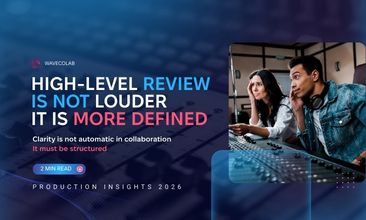
Giving Better Audio Feedback: A Simple Guide for Clearer Communication
Audio feedback usually starts with good intentions.
You hear something that isn’t working. You know it can be better. You try to be helpful, precise, and efficient. And yet, a few revisions later, the result still feels off. Not wrong. Just not right.
Most of the time, that doesn’t happen because of bad skills or bad tools. It happens because the feedback missed the point — or lost context along the way.
This is a guide about fixing that.
The Moment You Realize “Boost High EQ” Isn’t the Point
You open the new version of the mix expecting relief.
Last time, you said, “Boost high EQ on the vocal.”
Clear. Technical. Easy to execute.
The vocal is brighter now. Cleaner. Exactly what you asked for.
And still, it doesn’t lead the song.
This is where many feedback loops stall. You asked for a technical change and got one. But what you wanted wasn’t more high frequencies. You wanted the vocal to feel closer. More confident. Like it deserved attention.
Once you notice this gap, everything shifts.
Instead of telling someone what to do, you start describing what should feel different when the track plays. The feedback stops being about tools and starts being about intention. And suddenly, the person on the other side isn’t just executing instructions. They’re responding to the same goal you’re hearing.
When Language Gets in the Way
Not all misunderstandings come from bad ideas. Many come from using the wrong language at the wrong moment.
Sometimes, technical language is exactly what’s needed. Numbers, ranges, clear instructions. Other times, it limits the conversation. You talk about EQ and compression, but what you’re really reacting to is energy, mood, or tension.
Good feedback isn’t about choosing one language forever. It’s about knowing when to switch.
This is where the format of feedback matters. Long message threads can flatten nuance. General comments often lose timing and context. Feedback that’s connected to specific moments in the audio helps preserve intention — which is why Wavecolab is built to support time-based, contextual comments rather than scattered notes.
The Trap of Fixing Details Too Early
This usually happens quietly.
You start discussing small adjustments. A reverb tail. A snare texture. A tiny automation move. Meanwhile, the song still feels crowded. Or flat. Or unfocused.
Details are tempting because they feel productive. But they only matter once the big picture works.
If the arrangement is cluttered, no amount of fine-tuning will solve it. If the balance is off, polishing individual elements just masks the underlying issue.
Clear feedback depends on hierarchy. Knowing what matters now and what can wait. Keeping feedback organized and connected to the source makes that prioritization easier.
When the Problem Isn’t Where You’re Looking
You call it a “muddy vocal.”
So you focus on the vocal. EQ changes. Compression tweaks. Maybe even re-recording.
Nothing really fixes it.
Eventually, someone lowers the piano in the low mids. Suddenly, the vocal clears up without touching it.
This happens all the time.
What we hear as a problem in one element is often caused by something else entirely. Strong feedback names the symptom but stays flexible about the cause. It leaves room to explore rather than locking into a single solution too early.
Why References Save Time (and Nerves)
There’s a moment where words stop helping.
You’re describing a sound, circling it, getting closer, but never quite landing. This is where references help align expectations.
A short clip. Ten seconds. One example.
Not to copy, but to clarify direction.
When references and feedback live close to the audio itself — instead of buried in emails or chat history — they’re easier to understand and easier to act on. That kind of proximity helps reduce unnecessary back-and-forth.
The Small Question That Prevents Big Mistakes
At the end of a session or message, there’s a simple habit that changes everything.
You ask: “Does that direction make sense to you?”
Not because the other person lacks experience. But because assumptions are costly. Most misalignment happens quietly, before anyone realizes it.
Clear feedback tools help here by making it easier to respond, clarify, and keep the conversation focused on the same material.
Better or Just Different?
Eventually, a new version arrives that surprises you.
It doesn’t sound like what you imagined. But it works.
This is the final decision point. Is the result actually worse, or does it just feel unfamiliar because you’ve lived with the old version for too long?
Good feedback requires honesty here. New doesn’t mean wrong. Familiar doesn’t mean correct. The only real reference is the goal you set at the beginning.
Clear, well-contextualized feedback makes this decision easier — because the reasoning behind the change is still visible.
Conclusion
Giving better audio feedback isn’t about control. It’s about alignment.
When intention is clear, language is chosen carefully, and feedback stays connected to the audio itself, collaboration becomes smoother and more focused. Fewer misunderstandings. Fewer unnecessary revisions. Better creative conversations.
Wavecolab is designed to support this kind of workflow by keeping feedback organized, contextual, and tied directly to the work — without trying to replace the creative process itself.
In the end, the strongest feedback doesn’t tell people what to do. It helps everyone aim at the same thing and recognize when they’ve arrived