Picture this: You drop a raw, unfinished rough mix into your project group on WhatsApp or Telegram. You ask your team a direct question: "How are we feeling about the low end and that transition into the second verse?"
An hour later, your phone buzzes. A close collaborator responds with a fire emoji and a quick message: "Sounds awesome, man! 🔥"
You feel a wave of validation. You finish the tracking, send the files to a mastering engineer, and pay the invoice. Then, three days before the official release, you get a long, anxious text from that exact same collaborator: "Hey, I just did the car test. I actually think the low end is completely muddy, and the second verse loses all its energy. Can we pull it back from mastering and remix that section?"
Your stomach drops. Your budget is spent, your timeline is blown, and your momentum is dead. You find yourself asking the ultimate question: Why didn't they just tell me that two weeks ago?
The culprit here is not a lack of musical ears or talent. It is the quietest killer of independent records: asynchronous digital politeness.
The Coin-Flip Problem: What the Data Says
We often assume that modern messaging tools make remote production frictionless. In reality, generic chat apps act as a massive filter that bleaches the teeth right out of creative projects. When you move your professional relationships out of physical studios and into simple text bubbles, your psychological defaults change completely.
A famous study by social psychologist Justin Kruger published in the Journal of Personality and Social Psychology exposed a massive flaw in digital communication. The data showed that text-based senders assume their tone and intent will be correctly interpreted 78% of the time. In reality, the people receiving those messages decode the true meaning or emotional nuance accurately only 56% of the time.
The Reality Check: Your text-based creative feedback is operating on a near coin-flip level of accuracy.
Because text completely strips away vocal tone, facial micro-expressions, and immediate pacing, the human brain naturally perceives text as a high-risk environment for conflict. To avoid sounding aggressive, unsupportive, or demanding, your collaborators default to safe, frictionless validation. They send a fire emoji not because the track is perfect, but because typing out a detailed, critical teardown over text feels like an emotional minefield.
Why Politeness Breeds Boring Music
Great records are rarely born out of polite compliance. They are forged in the healthy, passionate friction of a physical control room. It takes two people arguing over a snare sample, a sudden mid-session decision to scrap a chorus, or the uncomfortable realization that a vocal take just isn't hitting.
Harvard Business Review’s extensive research on high-performing teams shows that innovative outcomes depend entirely on a team's ability to engage in constructive conflict. When teams communicate solely via unstructured text streams, they experience a sharp drop in real-time creative friction.
Instead of sharpening an idea through rapid debate, remote creators fall into a "polite compromise loop." Each collaborator slowly shaves off the radical, strange, or polarizing edges of a song to keep the digital relationship smooth. The result is a record that is mathematically safe, deeply unoffensive, and utterly boring.
The Noise Problem: Too Many Cooking Egos
In an open chat group, the friction multiplies because there are no boundaries. A simple feedback thread often becomes cluttered with uncalibrated opinions. A label representative, a social media manager, or a collaborator's partner can chime in with casual, subjective comments like "make it sound more modern."
This unguided noise creates immense fatigue. The core creative engine (the producer and engineer) ends up wasting hours translating vague, polite text messages instead of focusing on technical adjustments. Without strict structural roles, the feedback loop completely derails.
The Solution: Shifting from Chat Friction to Waveform Clarity
The answer is not to abandon remote collaboration. The answer is to stop forcing highly technical music production into apps built for casual social texting. You need to move your projects out of social chat apps and into a professional environment engineered for audio data.
Platforms like Wavecolab completely eliminate the social anxiety of studio critique by changing how feedback is delivered.
1. Pinned Waveform Comments (Data Over Emotion)
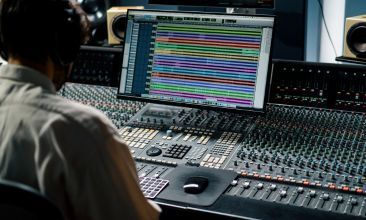
Instead of typing a vague, abstract paragraph in a chat box, Wavecolab allows users to highlight an exact time range directly on the visual waveform. Saying "This specific section from 1:12 to 1:18 feels muddy" is no longer a subjective, personal critique. It becomes an objective technical target pinned directly to the audio timeline. This simple design shift separates the art from the ego, making tough feedback feel safe and strictly actionable.
2. Role-Based Permissions (Clearing the Room)
Not everyone in your project ecosystem should have a creative vote. Wavecolab solves the "too many cooks" problem by introducing strict role hierarchies. By assigning external stakeholders to a Spectator role, they can listen to the progress and stay informed without the ability to leave messy, uncalibrated comments that disrupt the technical workflow. This protects the core producer-engineer dynamic from unnecessary outside noise.
3. Instant A/B Version Swapping
Politeness thrives on ambiguity. When creators can seamlessly switch between mix versions with a single click, guesswork disappears entirely. You no longer have to spend days politely debating whether a production change worked. You simply upload the new version, hit play, swap back and forth, and let the audio speak for itself.
Protecting the Song, Not the Chat History
Your favorite records are snapshots of intense, passionate compromise and creative warfare. They were made by professionals who cared enough about the final wave file to risk a brief, uncomfortable conversation.
The choice is simple: stop treating your master files like a group text. Fire emojis will not fix a weak arrangement, and polite compliance will never land your track on a listener's repeat playlist. Switch to a workflow built specifically for audio tracking, establish clear role boundaries, and be relentlessly honest with your team. The music is the only thing that actually survives the process.